

Here’s the thing about Dubai: everyone assumes it’s exclusively for the ultra-wealthy, that it’s all gold-plated supercars and $1,000 brunches. And sure, that Dubai exists. But here’s what I’ve learned after 15 years of sending travelers to the Emirates and visiting myself at least twice a year—there’s a “budget Dubai” hiding in plain sight, and timing is everything.
Last summer, I had a client—let’s call her Sarah—who was dead-set on visiting Dubai in December. Premium hotels, peak crowds, the works. I convinced her to shift her trip to May instead. Same hotel? 40% cheaper. Same experiences? Half the crowds. She sent me a thank-you message from a beach club saying I’d “changed her travel game forever.” That’s the power of knowing when to go.
So, what is the cheapest time to visit Dubai? The honest answer is May through September—Dubai’s scorching summer months. But there’s more nuance to it than just picking the hottest weeks. Let me break down exactly when you should book, what you’ll save, and how to make the most of Dubai without emptying your bank account.
Why Dubai Gets Cheaper (And When)
Dubai’s tourism industry operates on a predictable cycle. Peak season runs from November through March when the weather is perfect think 75°F days, zero humidity, and endless blue skies. That’s when European families escape the cold, and Brits descend en masse during their winter holidays. Hotels know this. Airlines know this. And prices reflect that knowledge.
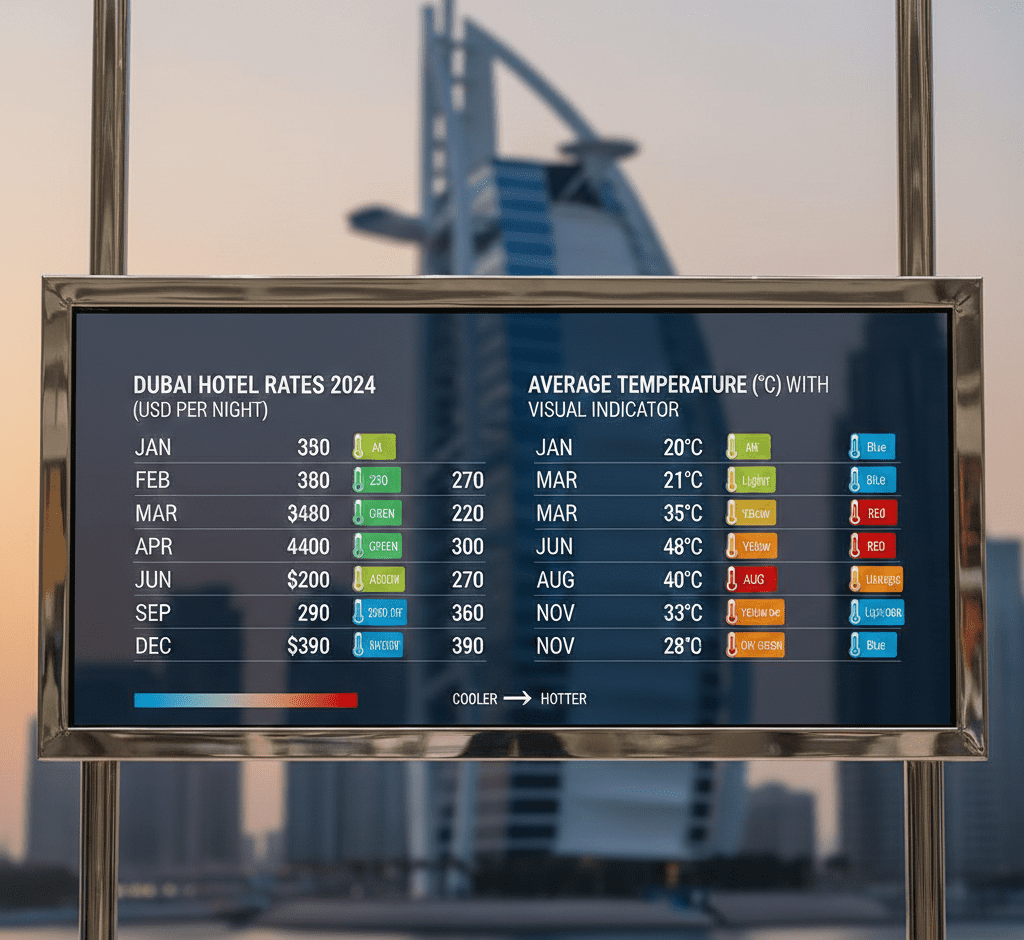
But here’s what happens from late April onwards: temperatures climb, tourists disappear, and suddenly Dubai needs you more than you need Dubai. Hotel occupancy drops by 30-40%, and properties start slashing rates to fill rooms. I’ve seen five-star properties on Sheikh Zayed Road go from $300/night in January to $110/night in July. Same marble lobbies. Same infinity pools. Wildly different price tag.
The absolute cheapest time of year to visit Dubai is typically May through early September, with July and August being the rock-bottom months. Yes, it’s hot—we’re talking 100-110°F daily. But Dubai is a city designed for heat. Every mall, restaurant, taxi, and attraction is aggressively air-conditioned. You’re not roughing it; you’re just being strategic.
The Sweet Spot: April & September
If the idea of 105°F makes you sweat just reading this, target the shoulder months: late April or September. Temperatures are still warm (85-95°F), but the worst heat hasn’t hit or has just passed. More importantly, hotel rates are still 30-35% lower than peak season, and you’ll avoid the winter crowds. I always tell clients that September is the “insider’s secret” most people don’t realize the heat breaks by mid-month, but hotels haven’t raised their rates yet.
What You’ll Actually Save (With Real Numbers)
Let’s get specific because “cheaper” means different things to different people. Based on my own bookings and industry data, here’s what budget-conscious travelers can expect during off-peak months:
- Hotels: Luxury properties drop 35-50%. That $400/night room at Address Downtown? Expect to find it for $180-220 in summer. Even mid-range hotels along Dubai Marina see 25-30% reductions.
- Flights: Airlines reduce capacity in summer, but ticket prices still drop 20-30% on average. I’ve tracked round-trip fares from London to Dubai: £450 in December vs. £280 in July. From New York, you’re looking at $800-900 in winter vs. $550-650 in summer.
- Attractions: Many attractions run summer promotions. The Dubai Mall aquarium, desert safari operators, and even theme parks like IMG Worlds of Adventure offer 20-30% discounts. Some days at Atlantis The Palm have special summer rates that undercut winter pricing by 40%.
- Dining: Restaurants participate in “Dubai Summer Surprises,” a city-wide promotion with special menus and deals. That fancy steakhouse you’ve been eyeing? Check for their summer prix fixe menu.
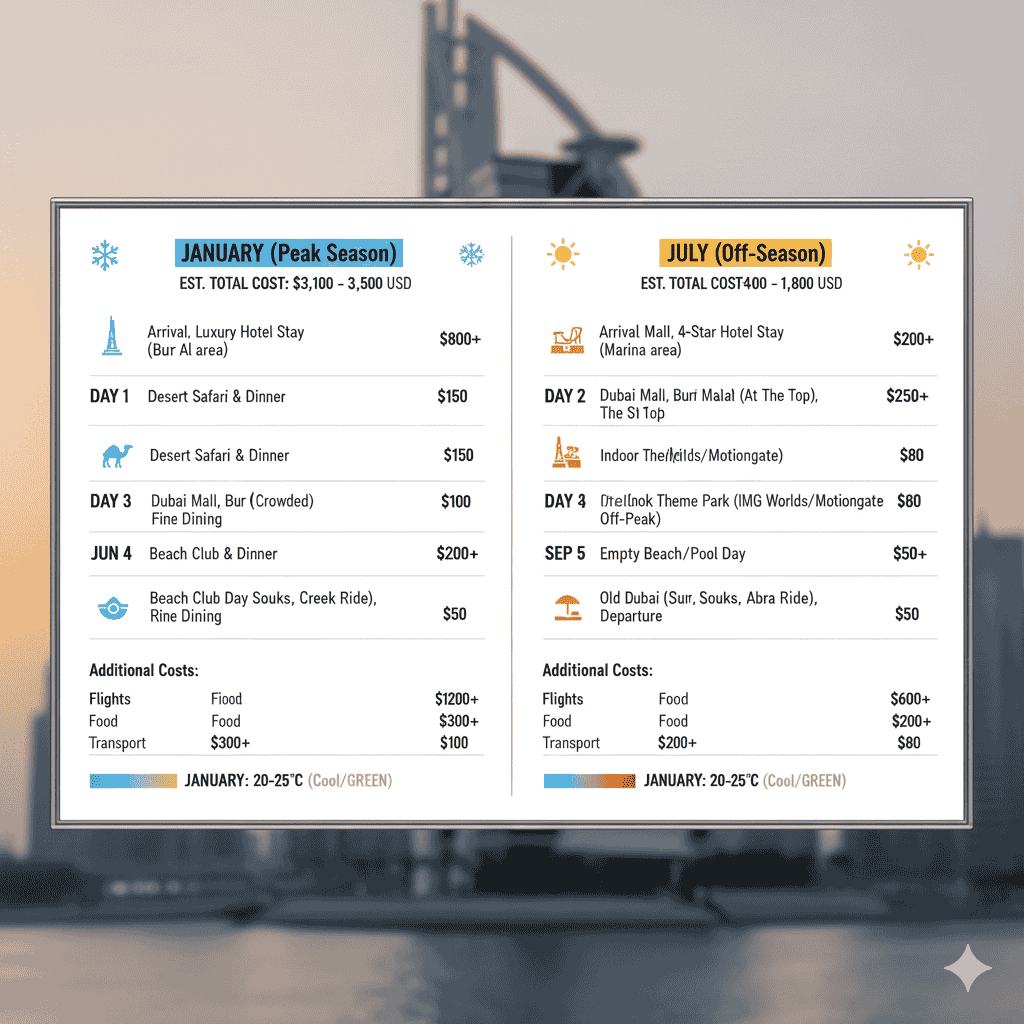
Let me paint a picture with an actual itinerary. A five-night Dubai trip in January for two people (mid-range budget): roughly $3,500-4,000 including flights, hotel, meals, and activities. The exact same trip in July? $2,200-2,600. That’s $1,000+ saved simply by traveling when it’s hot.
Is Summer Dubai Really That Bad?
I won’t sugarcoat it: Dubai in July feels like walking into a hairdryer pointed at your face. It’s intense. But here’s what most travel blogs won’t tell you—it doesn’t matter as much as you think.
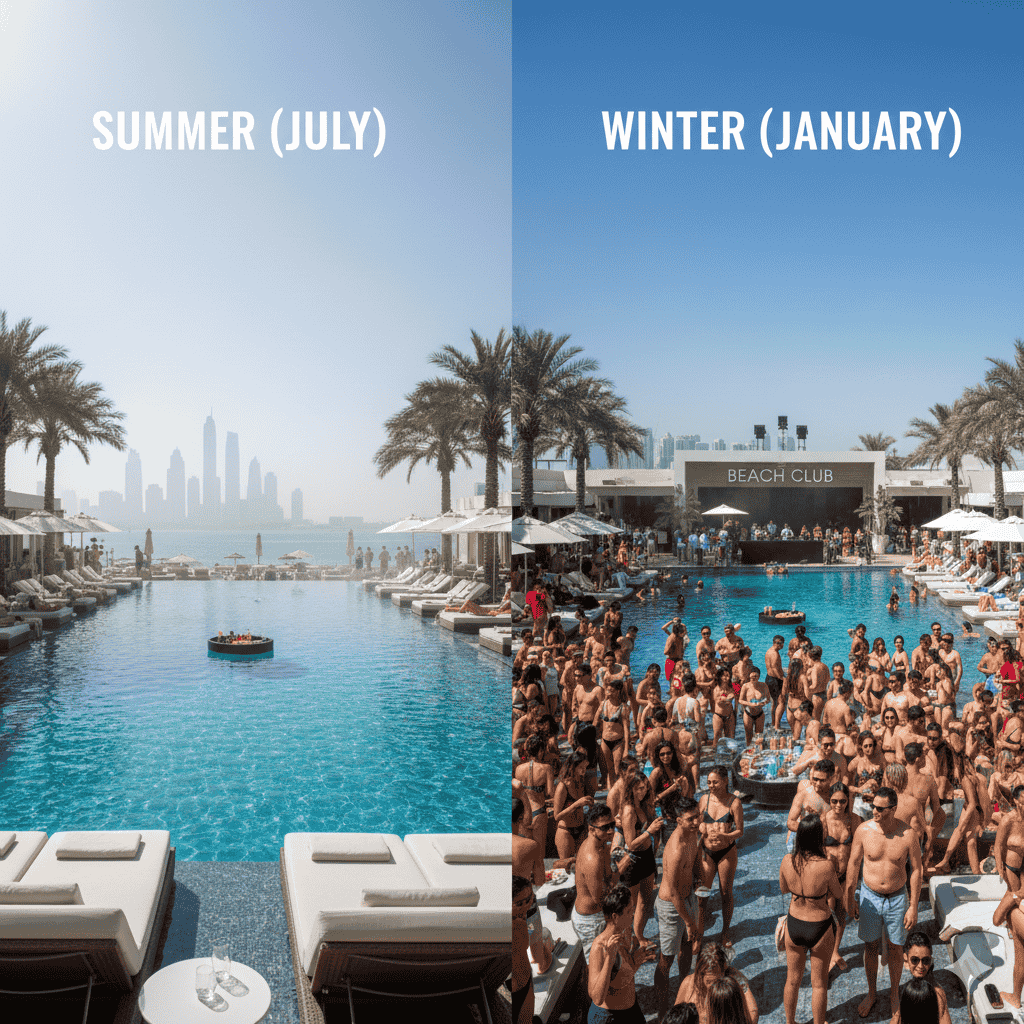
Your typical Dubai day looks like this: air-conditioned hotel → air-conditioned taxi/Metro → air-conditioned mall/attraction → air-conditioned restaurant → air-conditioned hotel. You’re spending maybe 10-15 minutes outdoors per day unless you’re specifically seeking beach or pool time. And guess what? The pools are empty in summer. Private cabanas at beach clubs? Readily available. No fighting for space.
I’ve done Dubai in both December and August. December felt like Disneyland—magical but packed. August felt like I had a private city. The Burj Khalifa observation deck at sunset? Three other couples. The Dubai Fountain show? Room to breathe. The Gold Souk? Merchants eager to negotiate because foot traffic is light.
Pro tip: Plan indoor activities for midday (11 AM – 4 PM) and save outdoor experiences for early morning or evening. The evenings cool to the mid-80s, which is perfectly pleasant for a desert safari or a walk along Jumeirah Beach Residence (JBR).
The Best and Cheapest Time to Visit Dubai: Month-by-Month Breakdown
Let me give you the insider’s calendar so you can pick your ideal window:
January-February: Peak season. Perfect weather, maximum crowds, highest prices. Avoid unless you hate heat or have no flexibility.
March: Shoulder season starts. Temperatures climb to 85-90°F. Prices drop 15-20%. Good compromise if you can swing it.
April: Underrated month. Weather is warm but manageable (80-95°F). Hotels reduce rates by 25-30%. Fewer tourists. One of my favorite times to visit.
May-August: Rock-bottom pricing. Intense heat (100-110°F), but maximum savings. If you’re budget-focused and heat-tolerant, this is your window. July and August are the absolute cheapest.
September: The comeback month. Heat eases mid-month, prices are still low, and the city starts waking up again. Excellent value.
October: Transition month. Weather improves dramatically (85-95°F), but rates start climbing. Book early October for the best balance.
November-December: Peak season returns. Winter weather, holiday crowds, premium pricing. December is especially expensive due to New Year’s Eve celebrations.
If someone asked me for the single best and cheapest time to visit Dubai, I’d say mid-April or the first half of September. You get tolerable weather, significant savings, and manageable crowds. It’s the Goldilocks zone.
[-> Link to: https://sunspiretourism.com/top-things-to-do-in-dubai]
Cheapest Time to Visit Atlantis Dubai (And Other Luxury Properties)
Atlantis The Palm is one of Dubai’s most iconic resorts, and it’s not cheap. But here’s the secret: Atlantis runs aggressive summer promotions. I’m talking 40-50% off room rates, complimentary water park access, and dining credits. A room that costs $500/night in January can drop to $250/night in July.
The cheapest time to visit Atlantis Dubai aligns with the city’s overall off-peak season—May through August. But watch for their “Summer Staycation” packages, which bundle room, breakfast, and Aquaventure tickets at rates that make winter pricing look absurd. I’ve booked clients into Atlantis during summer for less than they’d pay at a four-star downtown hotel in winter.
Other luxury properties follow the same pattern. The Burj Al Arab, Armani Hotel Dubai, and Jumeirah Beach Hotel all offer summer rates that are 30-45% lower than peak season. If you’ve ever dreamed of staying somewhere truly luxurious in Dubai, summer is when you can actually afford it.
[-> Link to: https://sunspiretourism.com/best-luxury-hotels-in-dubai-by-area-downtown-marina-deira-more/]
[-> Link to: https://sunspiretourism.com/best-luxury-beachfront-hotels-in-dubai/]
Cheapest Time to Visit Dubai in 2026: What to Watch For
Planning ahead for 2026? Here’s what I’m telling my clients:
Ramadan considerations: Ramadan in 2026 will likely fall in late February or early March (dates shift annually based on the lunar calendar). During Ramadan, Dubai quiets down—many restaurants close during daylight hours, and the city takes on a more subdued atmosphere. However, hotel rates often drop because fewer tourists visit. If you’re respectful of the customs and don’t mind adjusted dining hours, Ramadan can offer excellent value. Just avoid the Eid holidays immediately after, when prices spike.
Summer 2026 promotions: Dubai has made summer tourism a priority in recent years, launching city-wide campaigns like Dubai Summer Surprises with shopping discounts, entertainment deals, and hotel packages. Expect these to run from June through August 2026. I always advise booking early (March-April) to lock in promotional rates before they sell out.
September advantage: September 2026 will again be a sweet spot—the tail end of summer pricing before winter tourists arrive. It’s when savvy travelers who’ve done their homework show up.
How to Maximize Savings During Off-Peak Season
Knowing when to visit is half the battle. Here’s how to stretch your dirham even further:
Book packages: Many tour operators bundle hotel, flights, and activities at discounted rates during summer. Sunspire Tourism (yes, that’s us) offers comprehensive packages that save clients 20-30% compared to booking separately. Our evening desert safari packages and morning desert safari experiences run year-round with special summer pricing.
Leverage hotel perks: Summer stays often include extras—free breakfast, spa credits, airport transfers. Always ask what’s included before booking.
Dine smart: Take advantage of lunch specials at high-end restaurants. That $80 dinner entrée? Often available for $30 at lunch. Also explore Dubai’s incredible international food scene—Indian, Filipino, and Lebanese restaurants offer exceptional value year-round.
Use public transport: The Dubai Metro is clean, efficient, and dirt-cheap. A day pass costs about $5 and gets you almost anywhere tourists want to go. Skip the $40 taxi rides.
Free attractions: Dubai has surprising free experiences—Jumeirah Public Beach, the Gold and Spice Souks, the Dubai Fountain show, and Kite Beach are all free. Check out our guide on free and cheap things to do in Dubai for a full list.
My Final Take: Is Dubai Worth It in Summer?
Look, I won’t pretend Dubai in July is everyone’s idea of paradise. If you’re planning a trip where you want to spend eight hours a day lounging poolside or exploring outdoor markets, summer isn’t ideal. But if you’re willing to embrace air-conditioned comfort and strategically plan your outdoor time, you’ll experience a Dubai that most tourists never see—and save a fortune doing it.
I think about Sarah, my client who made the switch to May. She stayed at the same five-star hotel for 40% less, experienced zero lines at the Burj Khalifa, and booked a private desert safari through us (check out our special buggy tour for an adrenaline rush) without the winter crowds. She called it the “best travel decision she’d ever made.”
The cheapest time to visit Dubai is May through September, with July and August offering maximum savings. But the best time balances cost, weather, and experience and for most travelers, that’s late April or September. You’ll dodge both the intense heat and the peak prices, getting the best of both worlds.
Dubai is a city of extremes—extreme heat, extreme luxury, extreme ambition. But it’s also a city that rewards smart travelers who know when to show up. Summer might not be perfect, but for budget-conscious adventurers willing to trade some sweat for serious savings, it’s unbeatable.
Ready to start planning? Browse our things to do in Dubai by area or book a sunrise desert safari to experience the desert before the heat kicks in. Dubai’s waiting and now you know exactly when to go.