


Desert Safari Camp Entertainment Guide: Shows, Henna, Shisha & Falcons
The dune drive gets the headlines, but the camp is where a desert safari spends most of its evening. After the sunset stop, you arrive at a Bedouin-style camp in the dunes — and the next two hours are filled with shows, music, and hands-on activities that have nothing to do with driving.
This guide to desert safari camp entertainment explains what to expect: the Tanoura and fire shows, the dance performances, henna painting, shisha, falcon encounters, and the quieter corners of the camp that most visitors miss. Food is part of the evening too, but this guide focuses on everything except the dinner.
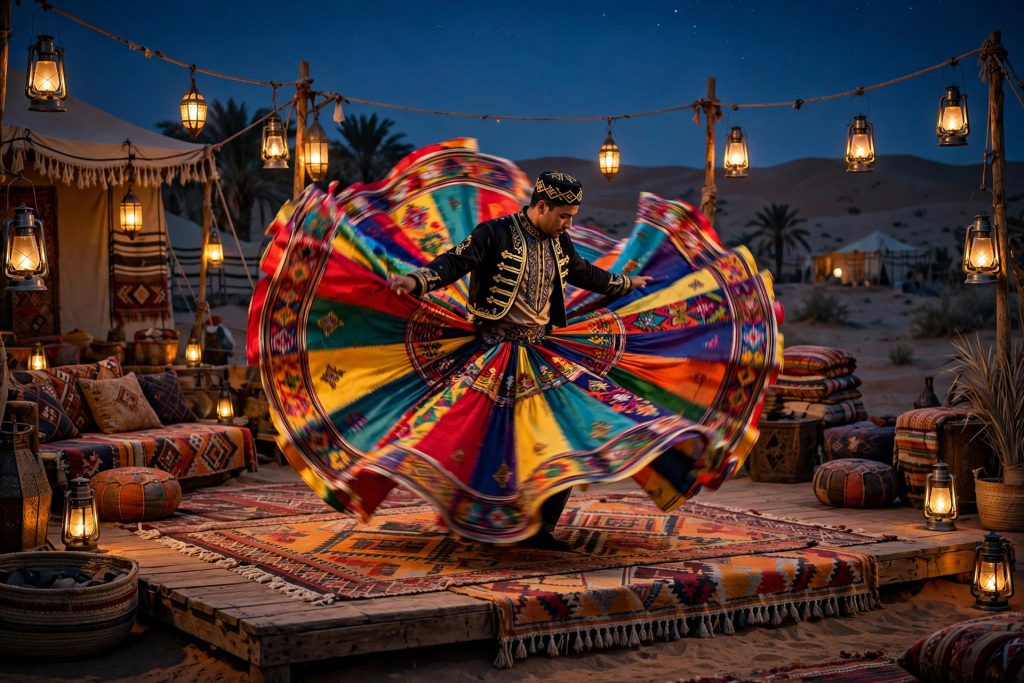
Desert Safari Camp Entertainment: The Shows
The stage show is the centrepiece of the camp evening, usually running in a set order while dinner is served. The exact line-up varies by camp and by package, but most evening camps feature a similar mix — and understanding the acts in advance helps you enjoy them.
The Tanoura is usually the first act and the most distinctive: a performer in a long, layered, brightly coloured skirt spins continuously, the skirts fanning out into circles of colour. It is a traditional Egyptian folk dance with Sufi roots, and spinning for many minutes without a break is a test of balance and stamina. Watch the skirts, not the feet — the patterns are the point, and they photograph best when the skirts are fully extended.
The fire show usually follows, and it is the most dramatic act of the night: performers spin, juggle, and breathe fire against the dark desert sky. Sit a little back from the stage — you will see the full shapes of the fire trails, and you will not be in the path of the heat.
Dance performances round out the programme at most camps, the best-known being belly dancing to Arabic music. One thing to know: belly dancing is not performed during Ramadan, when camps adjust the programme out of respect for the holy month — expect the Tanoura and fire shows to carry the evening instead. Check the evening desert safari page to confirm what is running on your date.
A practical tip for the shows: the best seats are not always the front row. The stage is usually low and the camp seating is arranged in a wide arc, so a seat a few rows back and slightly to the side often gives you a better view of the whole stage — and a better angle for photos. Arrive at the camp, settle in, and claim your spot before the first act starts rather than drifting in halfway through the Tanoura.
Desert Safari Camp Entertainment Beyond the Stage: Henna, Shisha & Falcons
The stage is only half the camp. Around its edges, a set of smaller, hands-on activities runs all evening, and these are often the parts visitors remember most — because you take part in them rather than watching.
Henna painting is the most popular. An artist applies a temporary design to your hand or arm, usually floral or geometric, using a small cone of henna paste.
It takes a few minutes, it is free at most camps as part of the package — though this varies, so confirm on the tour page — and the design darkens over the next day before fading over a week or so.
Go later in the evening, between the shows, and you will wait far less. It is a small, quiet corner of the desert safari camp entertainment on offer — and one of the few you take home with you. One caution: if you have sensitive skin, ask what is in the paste before you sit down, or skip it.
Shisha is the camp’s social corner: a traditional water pipe, usually in flavours such as apple, mint, or grape, set up where guests gather and relax between the shows. At many camps it is included; at others it is a paid extra in a separate area. If you do not smoke, there is no pressure to take part — the seating area is still a pleasant place to sit and watch the evening.
Falcon encounters are the most photogenic activity at the camp. A handler brings a falcon — the UAE’s national bird and a symbol of Bedouin heritage — and guests can hold it on a gloved hand for photos.
Falconry has been practised in the Arabian desert for centuries, and handlers are usually happy to explain the bird and its role in desert culture. The falcon is usually available only early in the evening, so head there as soon as you arrive if a photo matters to you.
You may also find a short camel ride, sandboarding, and traditional Emirati dress for photos — all quick experiences you can fit between the shows without missing anything on stage. For the full safari day, see our morning vs evening comparison.
What the Camp Feels Like: Atmosphere, Timing and Seating
The camp is a low, open space — cushions and low tables on carpets, a stage at one end, activity corners around the edges, and the desert stretching dark beyond the lights. That first hour is when desert safari camp entertainment is at its best: the sky still faintly blue, the camp lights on, the first show starting. That is the moment to take your photos, while the crowd is still settling rather than moving around.
Timing matters because the evening is packed: arrival and photos, a short window for the camel ride, henna, and falcon photos, then dinner with the shows running alongside it. The shows and dinner overlap by design, so do the activities before you sit down to eat — once dinner starts, most people stay seated until departure.
Seating is communal and first-come, first-served: a shared table or cushion area with other guests. Families with young children often sit near the edges — see our family safari guide for more — and a spot a few rows back gives the best view and the easiest exit.
The camp gets cold: the temperature drops sharply after sunset in an open space with no walls, so bring a layer even if the afternoon was warm, and wear closed shoes for the sand. Our safety guide covers the practical side of the desert evening.
What Is Included — and What Varies
This is the part that catches travellers out: not every camp activity is included in every package. At some camps, henna, the camel ride, and shisha are included; at others, one or more is an optional extra or available only on upgraded packages.
The stage shows are usually part of the standard evening, but the line-up can change with the season, with Ramadan, or with the camp. A desert safari camp entertainment line-up a friend enjoyed in March may not be the same one running in November.
So treat any list of activities — including this guide — as a picture of what camps typically offer, not a promise about a specific booking. Before you pay, read the inclusions list for your package; if henna, the falcon photo, or a particular show is the reason you are booking, confirm it is included first. Compare packages on the Desert Safari Dubai page, and check Visit Dubai’s desert safari guide and its desert adventures overview for what a typical safari includes.
The same caution applies to the morning safari: it is shorter, finishes before midday, and has no camp evening at all. If the camp is the part you want most, book the evening safari; the morning desert safari is the better choice for dunes and sunrise without the camp.
7 Tips for Getting the Most Out of the Camp Evening
These seven tips will help you get the most out of the desert safari camp entertainment — the shows and activities, rather than the food or the drive.
- Arrive with a plan. Decide in advance which matters more: the falcon photo, the henna, or the front-row show seat. You cannot do everything first, so pick one and do it on arrival.
- Do the activities before dinner. Henna, falcon photos, and the camel ride are all easiest in the window between arrival and the first show. Once dinner starts, you will not want to leave your seat.
- Bring a layer. The camp is open-air and the temperature drops fast after sunset. A jacket is the difference between enjoying the last show and shivering through it.
- Charge your phone. Between the sunset, the shows, the falcon, and the camp lights, you will take more photos than you expect. A power bank is worth carrying.
- Sit a few rows back. You will see the whole stage, get better photos of the Tanoura skirts and the fire trails, and have an easier exit at departure time.
- Ask the handler about the falcon. A minute of conversation turns a photo into a memory — and the handlers are usually glad to talk about the bird.
- Stay for the last act. Many guests drift towards the vehicles before the final show. The last act is often the fire show, and it is the most spectacular thing on the programme — worth staying for.
Frequently Asked Questions
What shows can I see at a desert safari camp in Dubai?
Most evening camps feature a Tanoura dance show, a fire show, and dance performances as the core desert safari camp entertainment, often including belly dancing except during Ramadan. The exact line-up varies by camp, season, and package, so confirm what is running on your date on the tour page.
Is henna painting included in a desert safari?
Often, but not always. At many camps henna is included in the standard package; at others it is an extra or available only on upgraded packages. Check the inclusions list for the package you are booking before you pay.
Can I hold a falcon at a desert safari camp?
At many evening camps, yes — a handler offers falcon photos, usually early in the evening before the shows begin. The falcon is available for a limited window, so head there on arrival if a photo matters to you. Availability varies by camp and package.
Is shisha included at a desert safari camp?
It depends on the package. Shisha is offered at most evening camps, sometimes included and sometimes as a paid extra in a separate seating area. If it matters to you, confirm the arrangement for your package before booking.
Do desert safari camps have entertainment during Ramadan?
Yes, but the programme changes: belly dancing is not performed during Ramadan, and camps adjust the line-up accordingly, with the Tanoura and fire shows usually carrying the evening. Check the seasonal programme on the tour page if you are visiting during Ramadan.
Is the camp entertainment suitable for children?
Generally yes — the shows, the camel ride, and the falcon photos are popular with children, and camps are family-friendly. The fire show involves open flames, so keep young children seated with you during that act. See our family safari guide for age-specific advice.
Final Thoughts
The camp is the part of a desert safari that turns a drive into an evening — and the desert safari camp entertainment is what fills it. The dune bashing is the thrill, but the Tanoura skirts, the fire against the dark sky, the henna on your hand, and the falcon on your glove are the memories you take home. Go in knowing what is typically on offer, check what your package actually includes, and plan your first half-hour around the activities you care about most. If you are ready to choose your evening, compare the tours and their inclusions on Desert Safari Dubai.


