

By M Awais | SunspireTourism
Here’s the thing – desert driving isn’t just about having the right vehicle or knowing how to shift gears. It’s an art form that combines technical skill, environmental awareness, and a healthy respect for one of nature’s most unforgiving terrains. After years of guiding countless adventurers through Dubai’s stunning desert landscapes, I’ve witnessed both triumphant conquests and humbling reality checks.

The truth is, the desert doesn’t forgive mistakes. But with the right desert driving safety tips and preparation, you can transform what many consider a white-knuckle experience into an exhilarating adventure that leaves you craving more.
Why Desert Driving Demands Your Respect
Before we dive into the nitty-gritty of desert driving safety tips, let’s address the elephant in the room. The desert isn’t your typical Sunday drive terrain. We’re talking about an environment where temperatures can swing from scorching 50°C during the day to surprisingly cool nights, where visibility can change in seconds, and where getting stuck doesn’t just mean calling a tow truck – it could mean putting lives at risk.
I remember one particular evening desert safari in Dubai where a group arrived completely unprepared. They’d watched a few YouTube videos and thought they were ready to tackle the dunes. Three hours later, we were coordinating a rescue operation. That experience reinforced something I’d learned early in my career: respect the desert, or it will humble you real quick.
Four Essential Desert Driving Safety Tips You Can’t Ignore
1. Master the Art of Tire Pressure Management
This is where most people get it wrong, and honestly, I don’t blame them. Your regular city driving experience doesn’t prepare you for this fundamental desert driving principle.
Lower your tire pressure – but know your limits. For sand driving, you’ll typically want to reduce your tire pressure to around 15-18 PSI (compared to the usual 30-35 PSI for road driving). This increases your tire’s footprint, giving you better flotation over sand. Think of it like wearing snowshoes in deep snow – you’re distributing weight over a larger surface area.
But here’s the catch: go too low, and you risk damaging your tires or even having them slip off the rim during aggressive maneuvers. Too high, and you’ll dig yourself into the sand faster than you can say “desert safari.”
Pro tip: Always carry a reliable air compressor and tire pressure gauge. You’ll need to reinflate your tires before hitting paved roads again. [-> link to: /desert-safari-equipment-guide/]
2. Understand Momentum is Your Best Friend
In desert driving, momentum isn’t just helpful – it’s everything. Unlike rock crawling where slow and steady wins the race, sand requires a completely different approach.
Maintain steady, consistent speed. When approaching a dune, resist the urge to floor it at the base. Instead, build your speed gradually and maintain consistent throttle input as you climb. The moment you hesitate or lift off the accelerator mid-climb, you’re asking for trouble.
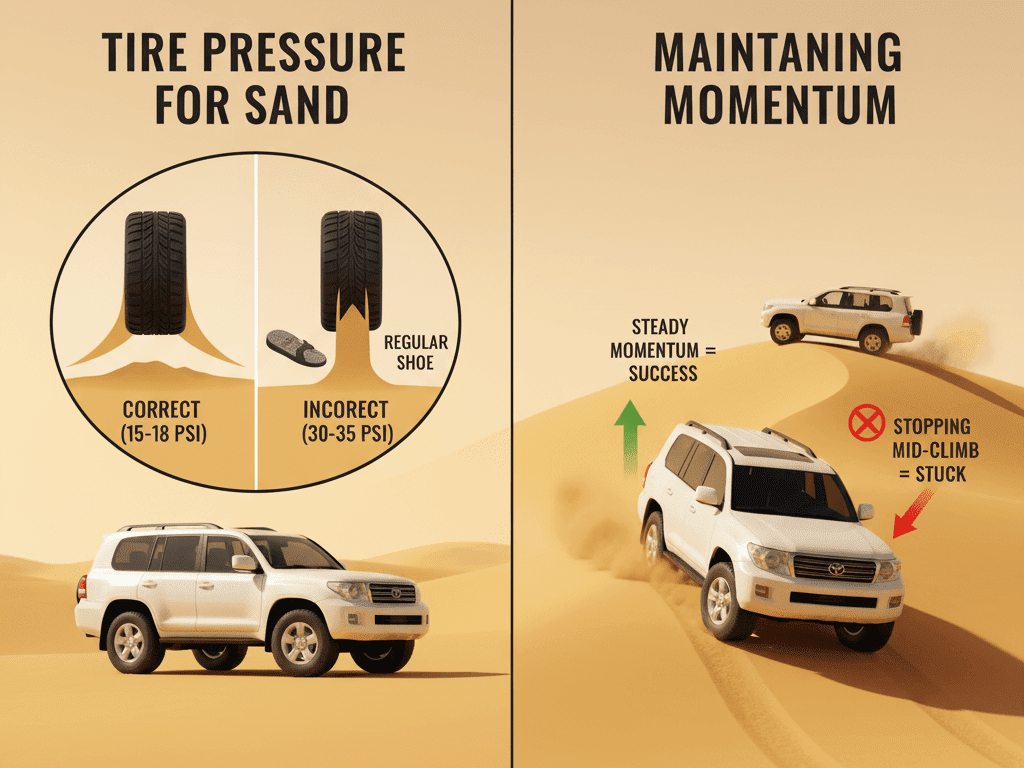
I’ve seen countless drivers make this mistake during our Dubai desert safari experiences. They attack the dune like they’re launching a rocket, only to bog down halfway up when the sand gets soft. The key is reading the terrain and adjusting your speed accordingly – aggressive enough to maintain momentum, controlled enough to stay safe.
3. Perfect Your Sand Navigation Techniques
Navigation in the desert is like solving a three-dimensional puzzle while the pieces keep shifting. Literally.
Follow established tracks when possible, but don’t become a slave to them. Other vehicles’ tracks can provide valuable information about safe routes and sand conditions, but don’t blindly follow them off a cliff. I’ve witnessed drivers follow tracks right into soft sand bowls where multiple vehicles had already gotten stuck.
Read the sand like a book. Dark, wet-looking sand is usually firmer and more stable. Light, loose sand that looks fluffy? That’s where you’ll find trouble. Wind patterns create ripples and formations that tell stories about sand consistency and stability.
Use the crest technique for dune navigation. When approaching the crest of a dune, slow down and approach at an angle. You never know what’s on the other side – it could be a steep drop-off, another vehicle, or unstable sand. This simple desert driving safety tip has prevented countless accidents in my experience.
4. Master Recovery Techniques Before You Need Them
Nothing tests your desert driving skills quite like getting stuck. And trust me, if you spend enough time in the desert, it’s going to happen.
Carry proper recovery gear. At minimum, you need a shovel, traction boards (or sand ladders), a tow strap, and a recovery point on your vehicle. But gear is useless without knowledge.
The dig-and-lift technique: When stuck, resist the urge to floor the accelerator. Instead, dig out the sand from around your tires, place traction boards or mats under your tires, and gently ease forward. Sometimes, letting additional air out of your tires (down to 12-15 PSI) can provide the extra flotation needed to escape.
Know when to call for help. There’s no shame in recognizing when you’re in over your head. Professional desert guides and recovery services exist for a reason. [-> link to: /emergency-desert-contacts/]
Dubai Desert Safari Safety Tips: Special Considerations
Dubai’s desert environment presents unique challenges that go beyond basic desert driving safety tips. The combination of extreme heat, tourist traffic, and varied terrain requires additional precautions.
Weather and Timing Considerations
Avoid driving during sandstorms. Dubai’s shamal winds can create sandstorms that reduce visibility to near zero. If you encounter deteriorating conditions, stop and wait it out. Your Instagram shots aren’t worth risking lives.
Plan around temperature extremes. Summer temperatures in Dubai can exceed 50°C, putting enormous stress on both your vehicle and your body. Early morning and late afternoon drives are not just more comfortable – they’re safer.
Tourist Area Awareness
Dubai’s popular safari areas see heavy traffic, especially during peak tourist seasons. This means:
- More inexperienced drivers on the dunes
- Increased likelihood of encountering stuck vehicles
- Higher importance of maintaining safe following distances
- Greater need for patience and defensive driving
Desert Hiking Safety Tips: When You Leave the Vehicle Behind
Sometimes the best desert experiences happen on foot. But desert hiking safety tips deserve their own serious consideration.
The Golden Rules of Desert Hiking
Tell someone your plans. Always inform reliable contacts about your hiking route, expected return time, and emergency procedures. The desert’s vastness can quickly turn a simple walk into a serious survival situation.
Carry more water than you think you need. The rule of thumb is one gallon per person per day, plus emergency reserves. Dehydration happens faster in desert conditions than most people realize.
Dress appropriately. Light-colored, loose-fitting clothing provides better protection than minimal coverage. Don’t forget sun protection for your head, neck, and eyes.
Navigate with backup systems. GPS devices can fail, batteries can die, and electronic systems can malfunction in extreme heat. Always carry a physical map and compass as backup navigation tools.
Emergency Preparedness: Your Desert Survival Kit
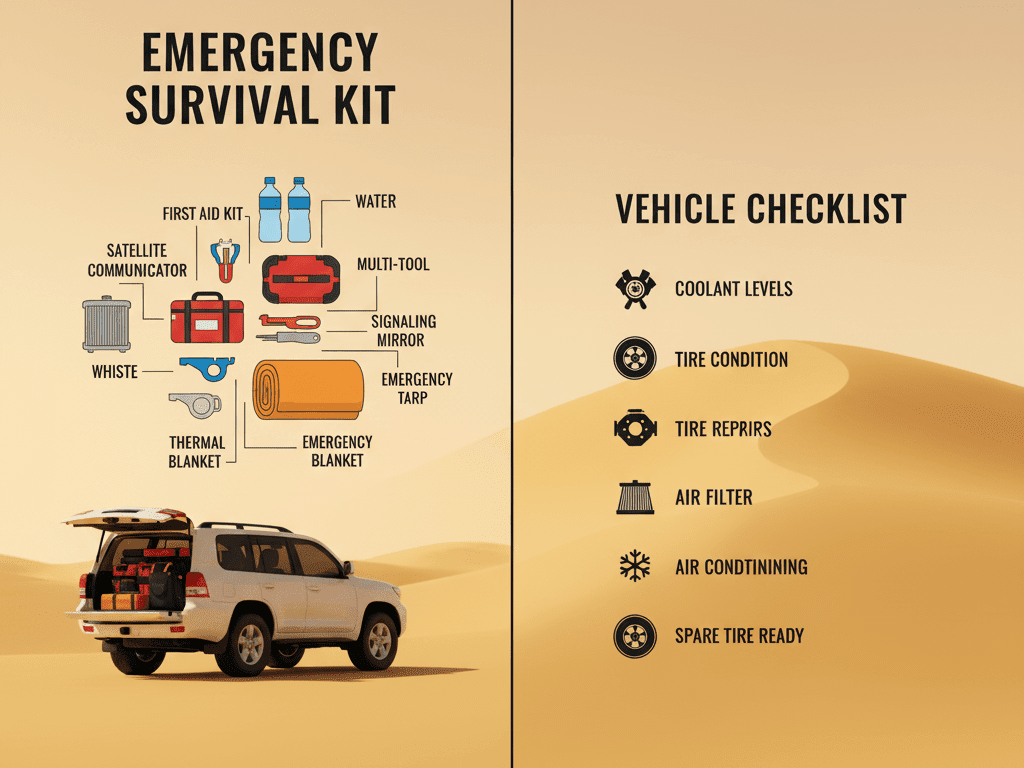
No discussion of desert driving safety tips would be complete without addressing emergency preparedness. Here’s what should always be in your vehicle during desert adventures:
Essential Safety Equipment
- Communication devices: Satellite communicator or emergency beacon
- Water: Minimum one gallon per person, plus reserves
- First aid kit: Desert-specific items including burn treatment and heat exhaustion supplies
- Tools: Multi-tool, basic repair kit, spare belts and hoses
- Signaling devices: Mirror, whistle, bright-colored cloth
- Shelter materials: Emergency blanket, tarp, or pop-up shelter
Vehicle-Specific Preparations
Before heading into desert terrain, conduct a thorough vehicle inspection:
- Check coolant levels and cooling system condition
- Inspect tires for wear and proper pressure
- Verify air filter cleanliness (sand is brutal on engines)
- Test air conditioning system operation
- Confirm spare tire and jack functionality
Learning from Real Desert Experiences
Let me share a story that illustrates why these desert driving safety tips matter so much. Last year, during one of our Dubai desert safari expeditions, we encountered a family who had ventured out on their own with minimal preparation. They’d rented a 4WD vehicle and figured their city driving experience would translate to sand driving.
They found themselves stuck in a sand bowl about 30 kilometers from the main road, with their vehicle buried up to the axles. What started as a fun family adventure quickly became a serious situation when their air conditioning failed and they realized they had brought only two small water bottles for four people.
The rescue operation took six hours and involved multiple vehicles and professional guides. The family was fortunate – they had cell phone coverage and were discovered before the situation became life-threatening. But it easily could have been a tragedy.
This experience reinforced something I’ve learned over years of desert guiding: the desert doesn’t care about your experience level, your vehicle’s price tag, or your confidence. It demands respect, preparation, and humility.
Advanced Desert Driving Techniques
Once you’ve mastered the basic desert driving safety tips, there are advanced techniques that can enhance both your safety and enjoyment:
Reading Terrain Like a Pro
Identify sand types. Coarse sand provides better traction than fine sand. Virgin sand (undisturbed by other vehicles) often offers more stability than churned-up areas where multiple vehicles have passed.
Understand wind patterns. Wind creates natural highways and soft spots. Windward slopes are typically firmer, while leeward slopes collect loose, soft sand.
Group Driving Protocols
When driving with multiple vehicles:
- Maintain visual contact but avoid following too closely
- Establish communication protocols using radios or hand signals
- Designate a sweep vehicle to ensure no one gets left behind
- Plan meeting points at regular intervals
The Psychology of Desert Driving
Here’s something they don’t teach in driving school: desert driving is as much mental as it is physical. The vastness, isolation, and potential consequences can affect decision-making in ways you might not expect.
Stay calm under pressure. When things go wrong – and they will – panic is your enemy. The desert rewards calm, methodical thinking and punishes hasty decisions.
Know your limits. There’s a fine line between confidence and overconfidence. The most successful desert drivers are those who know when to push forward and when to turn back.
Conclusion: Your Desert Adventure Awaits
Mastering these desert driving safety tips isn’t just about avoiding problems – it’s about unlocking one of the world’s most incredible adventure experiences. The desert offers a unique combination of challenge, beauty, and personal growth that few environments can match.
Remember, every expert was once a beginner. The key is approaching desert driving with respect, preparation, and a commitment to continuous learning. Whether you’re planning your first Dubai desert safari or you’re an experienced off-road enthusiast looking to expand your skills, these safety principles will serve you well.
The desert is waiting, and it has stories to tell. But it will only share them with those who come prepared, drive safely, and show proper respect for one of nature’s most demanding classrooms.
Start with guided experiences, build your skills gradually, and never stop learning. Your future self – the one confidently navigating golden dunes with skill and safety – will thank you for taking the time to master these essential desert driving safety tips.
Ready to put these skills into practice?Dubai Desert Safari Packages Explore our professional desert safari experiences designed to teach you these techniques in a safe, controlled environment with expert guidance.
M Awais has over 15 years of experience guiding desert adventures and teaching advanced off-road driving techniques. His expertise has helped thousands of adventurers safely explore some of the world’s most challenging desert terrains.