

Worst Time to Visit Dubai: Months That Can Ruin Your Trip (2026)
Visiting anyway? Summer mornings are still perfect for the desert. Book a sunrise desert safari and beat the heat.
Here’s the thing about Dubai that nobody tells you in those glossy Instagram posts: timing your visit wrong can turn your dream vacation into a sweaty, expensive nightmare. I learned this the hard way during my first trip in August 2019, when I nearly melted stepping out of the airport.
After years of planning trips to Dubai and talking with hundreds of travelers, I’ve seen the patterns. Some arrive during peak chaos and wonder why they’re not having the magical experience they expected. Others come during the “off-season” and can’t figure out why everything feels closed or uncomfortably hot.
Let me save you from making the same mistakes.
The Absolute Worst Time to Visit Dubai: July and August
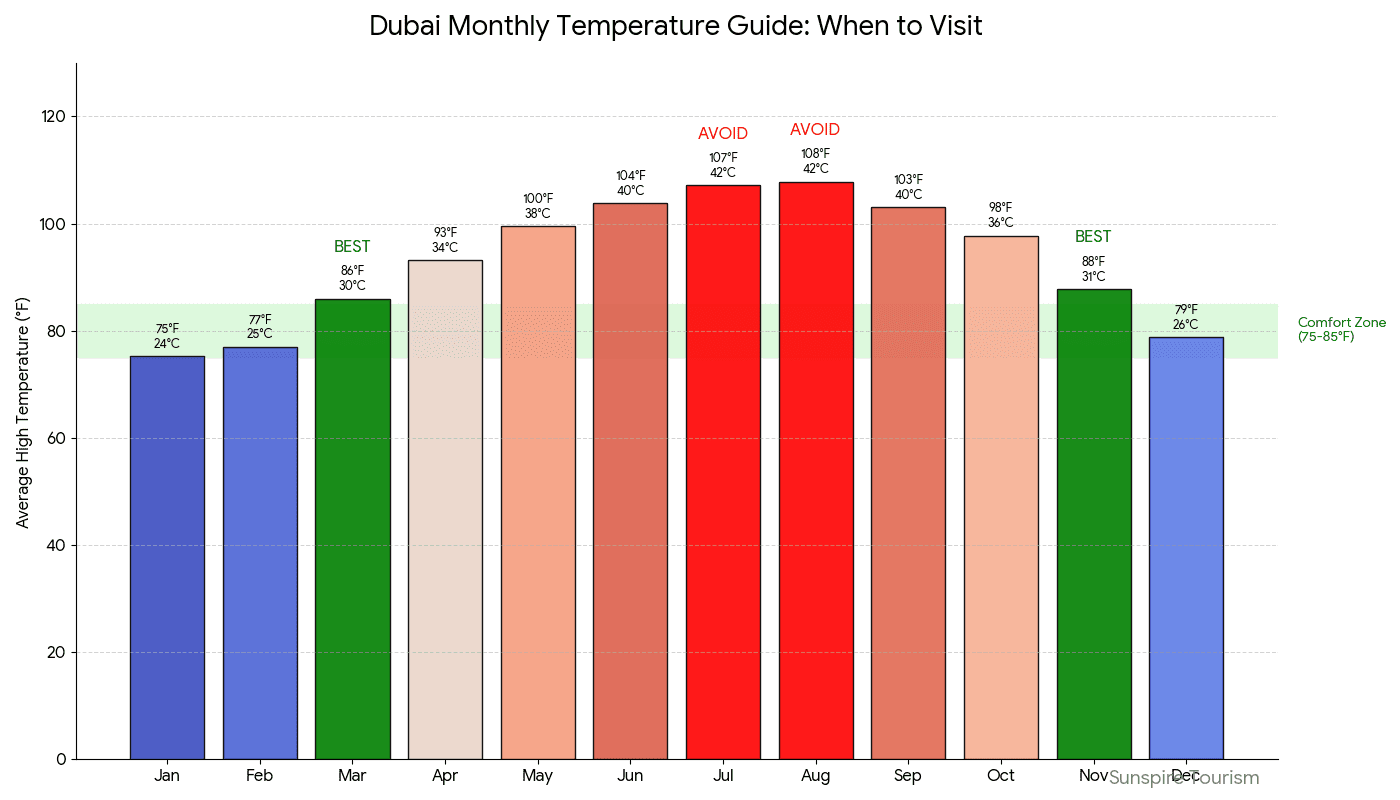
Let’s not sugarcoat it. July and August are brutal in Dubai. We’re talking about temperatures that regularly hit 105-115°F (40-46°C), with humidity levels that make it feel like you’re walking through hot soup. The heat index can climb to 120°F or higher.
I remember one August afternoon when a client insisted on walking from Dubai Marina to JBR Beach—a 15-minute stroll. By the time we arrived, his shirt was drenched, and he’d gone through two bottles of water. That’s not a vacation; that’s survival mode.
Why Summer in Dubai Is Particularly Challenging
The Reality of Desert Summer Heat
Dubai sits on the edge of the Arabian Desert. During summer, the combination of extreme heat and coastal humidity creates conditions that are genuinely dangerous if you’re not prepared. Between noon and 4 PM, the sun is so intense that even locals avoid outdoor activities entirely.
Most tourists underestimate this. They think, “I’ve been to Florida in summer” or “I handled Greece in August.” Trust me—Dubai summer is a different beast altogether. The asphalt radiates heat like a griddle, car door handles become too hot to touch without protection, and your phone will likely overheat and shut down if you leave it in the sun.
What Actually Happens to Your Vacation
Your carefully planned itinerary falls apart. That morning stroll through the Gold Souk? You’ll last maybe 20 minutes before retreating to air conditioning. Desert safari? Many operators actually reduce services or cancel during extreme heat because it’s unsafe. Beach time? The sand is so hot you literally can’t walk on it barefoot, and even the ocean water feels like bathwater.
You end up spending 90% of your time inside malls and hotels, which defeats the entire purpose of visiting Dubai’s stunning outdoor attractions. → Check out our guide on free and cheap things to do in Dubai for indoor alternatives, though you’ll want better timing to enjoy the outdoor options.
The Second-Worst Time: Mid-December Through Early January
Surprised? Most people assume winter holidays are perfect for Dubai. Here’s why they’re wrong—or at least, why timing matters more than you think.
The Holiday Crush Problem
Crowds and Chaos
Dubai becomes absolutely mobbed during the Christmas and New Year period. I’m talking about hour-long waits for restaurants that normally seat you immediately, beaches so packed you can barely find a spot to lay your towel, and attractions where you’ll spend more time in queues than actually experiencing anything.
The Dubai Fountain shows, normally a pleasant evening activity, become a shoulder-to-shoulder experience. The Burj Khalifa observation deck? Forget spontaneous visits—you’ll need to book weeks in advance and still face massive crowds.
The Cost Factor
Here’s where it really hurts: everything becomes dramatically more expensive. Hotel rates can triple compared to November or February prices. A room at a luxury beachfront property that costs $200 in October might jump to $600 or more during peak holiday season.
Flight prices follow the same pattern. According to data from several travel booking platforms, roundtrip flights from major European cities to Dubai cost 40-60% more during the holiday fortnight compared to shoulder season months.
Restaurants add special “gala dinner” surcharges for New Year’s Eve that can run $200-500 per person for mediocre buffets. Even taxi fares seem to surge due to increased demand and traffic congestion. → Learn about the cheapest time to visit Dubai to maximize your budget.
The Weather Caveat
Now, I have to be fair: the weather during this period is actually fantastic. You’ll enjoy perfect 75-80°F (24-27°C) days with minimal humidity. If you genuinely don’t mind crowds and have the budget for premium pricing, late December can work. But for most travelers, the trade-offs aren’t worth it.
Other Problematic Periods to Avoid
Ramadan (Dates Vary by Year)
Ramadan isn’t the “worst” time in the same way as summer, but it requires special consideration. During this holy month, many restaurants and cafes close during daylight hours, or only serve food in curtained sections. Nightlife is restricted, beach clubs close, and alcohol service is limited or prohibited in most venues.
For 2025, Ramadan is expected around late February to late March. If you’re not familiar with Islamic customs and aren’t prepared for the adjustments, you might find your vacation feels restrictive. However, if you’re interested in cultural experiences and don’t mind the limitations, Ramadan can offer unique insights into Emirati culture. → Explore the culture of Arabia to better understand this period.
Major Events and Conferences (February-March)
Dubai hosts massive events like the Dubai World Cup, Art Dubai, and numerous international conferences during February and March. While the weather is perfect, hotel availability shrinks and prices spike during these specific weeks. If you’re not attending these events, you’re essentially competing with business travelers and event-goers for resources.
The “In-Between” Problem: June and September
These transitional months are tricky. June is getting uncomfortably hot (95-105°F/35-40°C), but some tourists gamble on it because prices drop. September starts cooling down, but early September is still pretty brutal.
The truth? Unless you’re getting an absolutely unbeatable deal, skip these months too. The marginal savings aren’t worth the discomfort, especially when November offers much better conditions for similar or only slightly higher prices.
What the Weather Data Actually Shows
Let’s look at some concrete numbers that illustrate why timing matters so much:
Average High Temperatures:
- July-August: 106°F (41°C)
- December-January: 77°F (25°C)
- April: 88°F (31°C)
- November: 84°F (29°C)
Humidity Levels:
- Summer (July-August): 70-90%
- Winter (December-January): 60-70%
Rainfall: Dubai receives minimal rainfall, but what little precipitation occurs happens in winter months (December-February). We’re talking about maybe 1-2 days of light rain per month maximum—not enough to disrupt plans significantly.
→ Read our complete Dubai weather guide for month-by-month breakdowns.
When You Should Actually Visit Dubai
Since we’ve covered when NOT to come, let me give you the optimal windows:
Best Overall: November and March
These months offer the sweet spot of excellent weather (75-85°F/24-29°C), reasonable prices, and manageable crowds. You can comfortably enjoy outdoor activities, from desert safaris to beach clubs to exploring Old Dubai on foot. → Discover the best month to visit Dubai for detailed month-by-month guidance.
Great Value: October and April
Temperatures are slightly higher than the ideal range, but still very manageable. You’ll find better hotel deals and fewer tourists. October is particularly good because Global Village opens, giving you access to one of Dubai’s best cultural attractions.
Budget-Friendly: May and Late September
If you can handle warmer conditions (90-95°F/32-35°C) and plan your days around indoor activities during peak heat hours, you’ll score significant savings. Many luxury hotels offer steep discounts during these shoulder months.
How to Survive Dubai If You Must Visit During Bad Times
Life doesn’t always cooperate with ideal travel timing. Maybe your work schedule only allows summer travel, or family commitments lock you into holiday dates. If you’re stuck visiting during the worst times, here’s how to make it bearable:
Summer Survival Strategies
1. Embrace Mall Culture
Dubai’s malls aren’t just shopping centers—they’re entertainment complexes. The Dubai Mall has an aquarium, ice rink, and endless dining options. Mall of the Emirates has an indoor ski slope. Plan full morning-to-evening mall days.
2. Schedule Smartly
Do any essential outdoor activities before 9 AM or after 7 PM. Even in summer, early mornings and late evenings are tolerable. Book sunrise desert safaris instead of evening ones. → Check out our morning desert safari options.
3. Focus on Indoor Attractions
Museums like the Dubai Museum and the Etihad Museum are climate-controlled. Indoor attractions like Ski Dubai, aquariums, and activities at Dubai Airport keep you comfortable. → Explore things to do in Dubai at night when temperatures drop.
4. Choose Your Hotel Wisely
Stay at a luxury beachfront hotel with extensive indoor facilities—multiple restaurants, spa, gym, and preferably a temperature-controlled pool area. You’ll want reasons to stay on property during the hottest hours.
Holiday Season Strategies
1. Book Everything in Advance
I mean everything. Hotels, restaurant reservations, attraction tickets—book at least 2-3 months ahead. This gives you better prices before the last-minute surge and guarantees availability.
2. Use Apps and Advance Tickets
Skip-the-line tickets for attractions like the Burj Khalifa are essential during peak season. They cost a bit more but save hours of your vacation time.
3. Target Early Mornings
Popular spots like the Dubai Marina Promenade or Jumeirah Beach are less crowded before 9 AM. Get your Instagram shots early before the crowds arrive. → Find things to do in Dubai Marina and other areas.
4. Explore Lesser-Known Areas
Instead of fighting crowds at Downtown Dubai, explore neighborhoods like Al Seef, Al Fahidi Historical District, or Deira. → Discover Dubai tourism places to see beyond the main attractions.
The Bottom Line: Smart Planning Beats Everything
Look, Dubai is incredible. It’s one of those cities that truly delivers on the hype—when you visit at the right time. The worst time to visit Dubai is definitively July and August due to extreme heat, followed closely by the holiday crush of late December.
But here’s what I’ve learned after years in this business: the “perfect” time exists on paper, but your perfect time depends on your priorities. If you’re traveling with kids, school schedules might force a summer visit—make it work with smart planning. If you’re after luxury hotels at a fraction of normal prices, the shoulder seasons offer incredible value.
The key is going in with eyes wide open. Don’t book a July trip expecting to recreate those perfect winter travel photos you saw on social media. Adjust your expectations, plan accordingly, and you can still have an amazing experience.
Pro tip from years of experience: If you’re flexible with dates, aim for November or March. If you want to save money without suffering, go for October or April. And if someone invites you to Dubai in August? Politely suggest rescheduling.
Ready to plan your Dubai adventure? Check out our top things to do in Dubai and desert safari packages to start building your perfect itinerary—just make sure you’re visiting at the right time.
After all, Dubai is too incredible to experience while hiding from the heat or fighting crowds. Visit when the city shows its best face, and I guarantee you’ll understand why millions of travelers fall in love with this desert metropolis every year.
Planning your Dubai trip? Browse our curated selection of evening desert safari experiences and luxury dune buggy tours for unforgettable adventures in the Arabian Desert.
Experience the Magic of Arabian Desert Safari
Embark on an unforgettable journey through the golden dunes of the Arabian Desert. From thrilling dune bashing to mesmerizing sunset views and traditional Bedouin experiences, create memories that will last a lifetime.

Recent Posts

Evening Desert Safari Quad Bike: What to Expect