


Al Marmoom Desert Conservation Reserve: The Eco Safari Alternative
Most desert safaris in Dubai head for the same golden dunes, sunset photo stop and camp dinner. An Al Marmoom desert safari offers something quieter — space, wildlife, and a desert that is protected first and visited second.
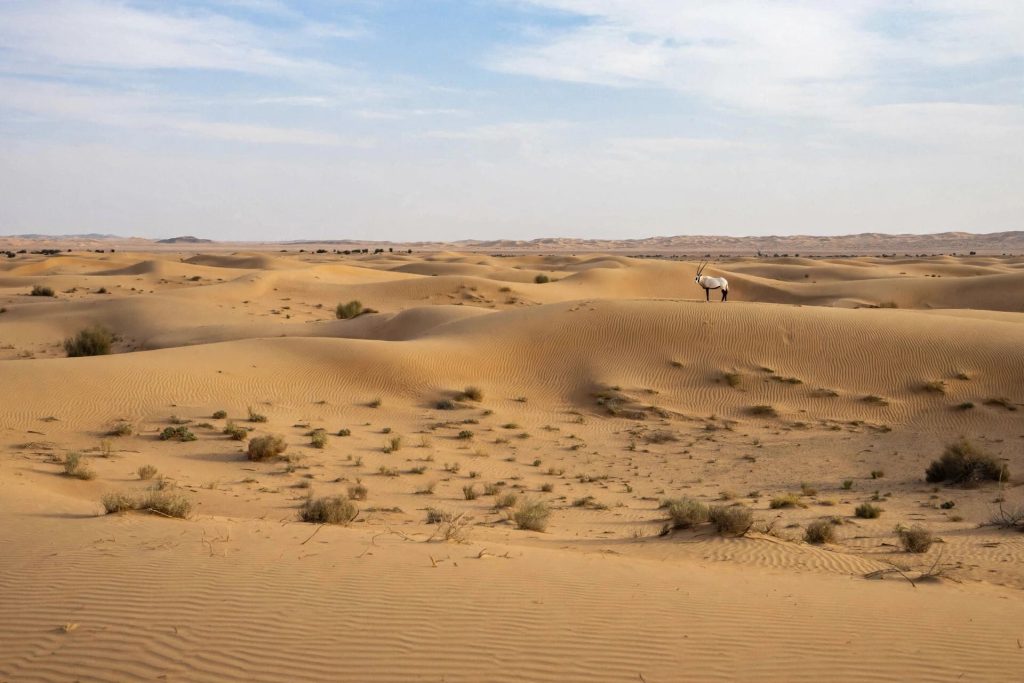
If you love the desert but want to see it without the crowds, this is the side of Dubai worth knowing about. This guide explains what Al Marmoom is, what an eco-minded safari there looks like, and how it differs from a standard safari.
What Is an Al Marmoom Desert Safari?
An Al Marmoom desert safari is a desert trip centred on the Al Marmoom Desert Conservation Reserve, a protected landscape in the south of Dubai around Saih Al Salam. Visit Dubai describes it as the largest unfenced nature reserve in the UAE, covering about 10% of Dubai’s total land area. Unfenced matters. There are no walls between the wildlife and their habitat, and no hard boundary between the reserve and the desert around it.
Al Marmoom was set aside to protect native desert plants and animals, to support the recovery of endangered species, and to give visitors a way to experience the Arabian desert without damaging it. The reserve includes dunes, gravel plains, ghaf woodland, and the man-made Al Qudra Lakes, which draw birds from across the region.
A trip here is therefore slower by design. Instead of racing from one activity to the next, you spend more time looking, listening, and travelling at a pace that suits the landscape. For many visitors, that slower pace is the whole appeal. To learn more before you visit, see Visit Dubai’s page on the Al Marmoom Desert Conservation Reserve and Dubai Municipality’s book a visit page for Dubai’s protected areas, which sets out how families, individuals, schools and groups can visit, including registration requirements.
7 Things That Make Al Marmoom Different
1. Wildlife you will not find on every safari
The reserve is best known for the Arabian oryx, a pale antelope with long, straight horns that was once extinct in the wild and has been brought back through conservation breeding programmes. It is a national symbol of the UAE, and Al Marmoom holds one of the city’s largest populations. Gazelles are the other signature sighting — Arabian, sand and mountain gazelles all live in the reserve, along with desert foxes and wild cats. None of these animals can be promised on a given day. They are wild, they roam a huge unfenced area, and they are most active in the cooler hours.
2. Birdwatching at the Al Qudra Lakes
The lakes are the surprise of Al Marmoom. In the middle of the desert, open water draws flamingos in the winter months, along with ducks, waders and herons. Sources agree on more than 200 bird species in the reserve, but exact counts differ, so treat any precise number with caution.
Dubai Municipality has built eight bird hides in the reserve to support birdwatching and eco-tourism — simple shelters that let you watch birds without disturbing them. Bring binoculars if you have them, keep your voice down, and stay on the paths provided.
3. A desert cycling track
An 86 km cycling track runs through the reserve, with bikes for hire nearby. It is a completely different way to meet the desert — quiet, unhurried, and close to the ground. Early morning is the best time, before the heat builds.
4. The Bedouin village and living heritage
Visit Dubai highlights a traditional Bedouin village in the heart of the reserve, built from authentic materials such as goat hair, with Bedouin tents, cooking stations, Arabic coffee-making, henna painting, a livestock area and a small souk. It is a reminder that this desert was home long before it was a tourist destination — and a heritage stop works best unhurried.
5. The Saruq Al Hadid archaeological site
The reserve also holds the Saruq Al Hadid archaeological site, described by Dubai’s Media Office as about 3,000 years old and one of the oldest sites in the country, dating back to the Iron Age. You will not wander through it on a casual safari, and you should not expect to. Its value here is context: people have lived, traded and travelled through this desert for thousands of years.
6. Space — real, open space
Because the reserve is so large and unfenced, it never feels crowded in the way a popular dune area can at sunset. The horizon is wide, the sand is quiet, and the sky at dusk is enormous. If your idea of a desert trip is solitude as much as activity, Al Marmoom delivers it.
7. A lighter footprint
An eco safari is a way of travelling: staying on tracks, taking litter home, keeping noise down, and not feeding wildlife. The desert looks empty, but it is a living ecosystem.
Al Marmoom Desert Safari vs a Standard Dubai Desert Safari
Neither option is “better” in every way. They suit different travellers. Use this comparison to choose honestly.
| Feature | Al Marmoom desert safari | Standard Dubai desert safari |
|---|---|---|
| Main focus | Wildlife, nature, heritage, quiet landscapes | Dune driving, sunset photos, camp dinner and shows |
| Pace | Slow, observational, unhurried | Busy, with several activities in one evening |
| Crowds | Usually quiet, wide open space | Can be busy at popular dunes and camps, especially in peak season |
| Wildlife | Oryx, gazelles, birds and foxes may be seen — never guaranteed | Occasional sightings, but wildlife is not the focus |
| Activities | Bird hides, lakes, cycling track, Bedouin village, photography | Dune bashing, camel rides, sandboarding, quad bikes, buggy rides, BBQ dinner |
| Best for | Nature lovers, photographers, families who want a calm desert day, repeat visitors | First-time visitors, thrill-seekers, groups who want the classic safari evening |
| Best time | Early morning or late afternoon, November to March | Late afternoon to evening, November to March |
Many travellers enjoy both. A standard evening safari gives you the classic Dubai desert experience. An Al Marmoom desert safari gives you the desert itself. If you have only one day, choose by temperament, not by what looks best in a brochure.
How to Plan Your Al Marmoom Desert Safari
Start by deciding what kind of trip you actually want. “Eco safari” can mean different things to different operators, so ask plain questions before you book. First, ask where the trip goes. Does it enter the Al Marmoom reserve itself, or does it visit dunes elsewhere in Dubai? Sunspire does not advertise a dedicated Al Marmoom tour, so do not assume a standard safari includes the reserve. Check the desert safari page and confirm at booking exactly where your trip goes and what is included.
Second, ask about the pace and the group size — a wildlife-focused trip works best in a small group with time built in for looking and stopping. Third, ask about the guide: a guide who knows the reserve’s birds, plants and animal signs will show you far more than a driver who only knows the route. Fourth, pick your time of day. Early morning suits wildlife and birdwatching; late afternoon suits photography and a cooler walk. Finally, dress for the desert: closed shoes, a hat, sunscreen, water, and a light layer for the evening. Our guide to what to wear on a desert safari covers this in detail.
What to Bring (and What to Leave Behind)
Pack light: binoculars for birdwatching at the lakes, a camera with a zoom lens, water and sun protection, a light jacket, and comfortable closed shoes. Leave behind anything that makes noise for no reason, single-use plastic you cannot carry out again, and any expectation of feeding or touching wildlife. The reserve’s rules exist to protect animals that have nowhere else to go.
For a broader sense of how to stay safe and comfortable in the desert, read our desert safari safety guide before you go.
When to Go: The Best Season for Al Marmoom
The best months for an Al Marmoom desert safari are November to March, Dubai’s cooler season. Days are warm rather than hot, evenings are cool, and migratory birds — including flamingos — are most likely to be at the lakes in the winter months. October and April are good shoulder months, with warm days and fewer visitors than the peak winter weeks. From May to September the desert is very hot, wildlife is less active in the middle of the day, and any outing needs to be early, short, and carefully planned.
Who Will Love Al Marmoom — and Who Might Not
You will love an Al Marmoom desert safari if you enjoy watching rather than rushing, if you like birds, photography, or desert landscapes, and if you have already done a standard safari and want a different side of Dubai. Families with older children who are curious about nature often enjoy it too.
You might be disappointed if you want dune bashing, quad bikes and a big camp show. Those are the pleasures of a standard safari, and Al Marmoom is not the place for them. If that is what you want, book an evening desert safari or a morning desert safari instead — or do both on different days.
The honest test is simple. If the words “quiet”, “wildlife” and “open space” excite you more than “fast”, “loud” and “busy”, Al Marmoom is your desert.
A Respectful Way to Visit a Protected Desert
A conservation reserve is not a theme park. The animals live there, and you are a guest. That means staying on marked tracks and paths, keeping a respectful distance from wildlife, never feeding animals, taking all litter home, and keeping noise low around the lakes and bird hides.
It also means being honest about what you saw. Some days you will see oryx and flamingos. Other days you will see tracks, birds at a distance, and a beautiful empty landscape. Both days count. The desert does not perform on demand, and that is part of its value.
Book Your Desert Safari with Sunspire
An Al Marmoom desert safari is the quieter, wilder side of Dubai’s desert — and the standard safari is still the best way to experience the classic dunes, sunset and camp evening. If you are deciding between the two, or you want to know what Sunspire can arrange for your dates, start with the main tour page and ask at booking.
See the Desert Safari and check availability →
Frequently Asked Questions
Where is the Al Marmoom reserve?
In the south of Dubai, around Saih Al Salam, on the edge of the city. It covers about 10% of Dubai’s land area and is the UAE’s largest unfenced nature reserve.
Can I see Arabian oryx there?
The reserve holds one of the city’s largest oryx populations, along with gazelles, foxes and many birds. Sightings are never guaranteed — the animals are wild, so early morning gives you the best chance.
Is there an entry fee or fixed opening hours?
This draft states no fee or hours, because they were not verified. Check Dubai Municipality’s protected-areas page, or ask at booking, before you go.
Does Sunspire offer a dedicated tour of the reserve?
Sunspire does not advertise a dedicated Al Marmoom tour. Check the main desert safari page and confirm at booking exactly where your trip goes and what is included.
What is the best time of year to visit?
November to March, Dubai’s cooler season. Flamingos are most likely at the Al Qudra Lakes in winter, and mornings and late afternoons are the most comfortable times.
Can I cycle in the reserve?
Yes — an 86 km cycling track runs through the reserve. It is best treated as a separate outing, early in the morning, rather than part of a standard safari.


