


Desert Safari Photography Tips: Golden Hour, Gear & Best Shots
The Dubai desert is one of the easiest places in the world to take a beautiful photograph — and one of the easiest to get wrong. The light is extraordinary, the dunes are sculpted by wind into clean, graphic shapes, and the colours shift from gold to orange to deep red in a single evening. But sand gets everywhere, the sun is harsh by midday, and the best moments pass in minutes.
These desert safari Dubai photography tips will help you come home with photos you actually want to keep, whether you shoot on a phone or a camera.
You do not need professional gear. You need to know when to shoot, what to protect, and where to stand. That is what this guide covers.
Desert Safari Dubai Photography Tips: Start With Golden Hour
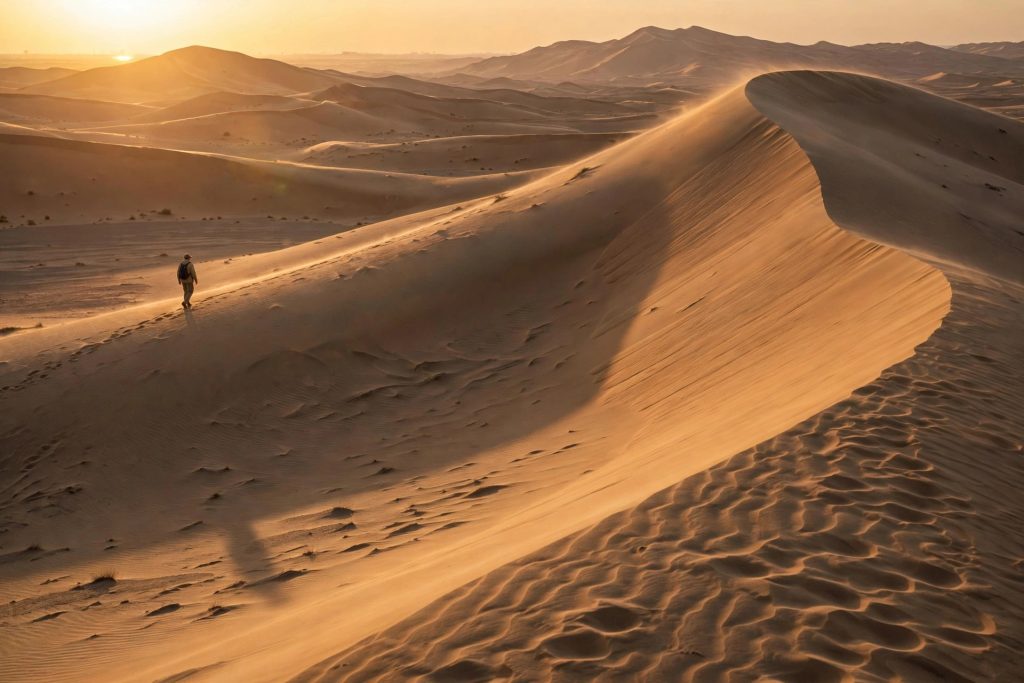
The single biggest factor in desert photography is light. In Dubai the best light comes at golden hour — around sunrise and sunset, when the sun is low and the light turns warm and soft. Long shadows stretch across the dunes, the sand glows, and every ridge becomes visible.
That is why the evening safari is the classic choice for photographers: you arrive in the late afternoon, the photo stop happens as the light turns golden, and the sunset is the centrepiece. The morning safari offers soft sunrise light with far fewer vehicles and people on the dunes. Our morning vs evening comparison explains how the two formats differ, and Visit Dubai’s desert adventures guide gives useful background on desert experiences in Dubai.
Do not plan your shoot around a specific sunset time — sunset times shift through the year, and your safari timing is set by the operator. Plan around the format instead: an evening safari puts you on the dunes for golden hour, a morning safari for sunrise light. Be ready before the light peaks: the best colour often lasts only a few minutes.
What to Bring: Gear That Works in the Desert
Sand is the enemy of cameras, and the desert rewards simple, protected kit. Pack light, pack protected, and leave anything you cannot afford to get sandy at the hotel. On any desert safari Dubai photography tips list, protection comes before gear: a sealed bag matters more than a second lens.
| Gear | Why bring it | Practical note |
|---|---|---|
| Phone | Most safari photos are taken on phones | Clean the lens first — a fingerprint ruins more photos than bad light |
| Camera + one zoom lens | Covers wide dunes and distant camels | One lens only; changing lenses in wind invites sand inside |
| Spare battery | Heat and shooting drain batteries fast | Charge fully the night before |
| Memory cards | You will shoot far more than you expect | Bring a spare; a full card at sunset is a painful lesson |
| Microfibre cloth | Sand and fingerprints on the lens | Keep it in a sealed pocket |
| Zip-lock bags | The best cheap camera protection there is | Seal gear during dune bashing and in wind |
| Small tripod or grip | Steadier shots in low evening light | A pocket tripod beats a full-size one |
Leave the drone at home unless you have confirmed permission in advance — desert areas and tour operations have their own rules, and you cannot assume you can fly. And whatever you bring, use a strap: a camera on a strap survives a bumpy dune ride, and a camera in a loose hand often does not.
Protect Your Gear From Sand and Heat
Sand gets into everything on a desert safari, and every set of desert safari Dubai photography tips has to start with protection. Keep your camera or phone in a sealed bag or zipped pocket during dune bashing — the 4×4 ride throws up fine dust, and windows may be open. Take it out only when the vehicle stops, and hold it lens-down when you are not shooting.
Do not leave a phone or camera on a car seat in direct sun: phones can overheat and shut down, so keep gear shaded. Our what to wear guide covers the clothing and packing side of the day, and the same “keep it shaded and sealed” rule applies to your kit.
The 7 Best Shots on a Desert Safari
You do not need fifty compositions. Seven strong shots cover the day, and these desert safari Dubai photography tips work because chasing seven shots keeps you focused instead of snapping at everything.
1. The wide dune landscape. Find a high ridge, place the horizon in the lower third of the frame, and let the curves of the dunes lead the eye. Include a tiny figure or vehicle for scale — without it, dunes can look flat.
2. The sunset silhouette. Stand so the sun is low behind your subject — a camel, a person, a vehicle — and expose for the sky. The subject goes dark, the sky goes dramatic. Take several: the colour changes every minute.
3. The camel portrait. Get low and close. A camel’s face, with the desert behind it, makes a striking portrait. Ask the handler before approaching.
4. Footprints and textures. Look down. Wind ripples, footprints, and sand patterns make beautiful abstract shots, especially in low side-light — and they are the easiest to miss.
5. The action shot. Dune bashing, quad biking, or a buggy kicking up sand — use burst mode and a fast shutter. Keep the vehicle in the frame with space in front of it, so it looks like it is moving into the shot. Our quad bike guide and buggy guide explain what those rides look like, so you can plan where to stand.
6. The camp at dusk. As the light fades, the camp comes alive — lanterns, fire, and warm light against a blue sky. Use night mode on a phone, brace the camera on a table, or use your pocket tripod.
7. The candid moment. The best safari photos are often unposed: someone laughing on a dune, a child meeting a camel, your group silhouetted at the sunset point. Keep shooting between the “official” shots.
Phone Photography: Getting the Most From What You Have
Most safari photos are taken on phones, and modern phones are more than capable. Turn on the grid and use the rule of thirds: place the horizon on a grid line, not in the middle. Tap to focus on your subject, then slide the exposure down slightly — phones overexpose bright sand, and a darker exposure keeps colour in the sky and texture in the dunes.
Use portrait mode sparingly: it works for a person against the dunes but can blur a camel’s ears unnaturally. For landscapes, step back instead of zooming — digital zoom degrades the image fast. Shoot in burst mode for anything moving, and shoot short video clips too. Clean your lens constantly: one grain of sand or one fingerprint is the difference between a sharp photo and a hazy one.
Desert Safari Dubai Photography Tips for the Evening Camp
The camp is a different kind of photography: warmer, closer, and darker. The light drops fast after sunset, so be ready. Switch your phone to night mode or raise the ISO on a camera, and brace yourself against something solid — a table, a post, a wall — rather than shooting freehand in the dark.
Fire shows and dance performances move fast, so use burst mode and accept that some frames will blur; the sharp ones will be worth it. Be respectful with flash: a bright flash during a performance distracts the performers and ruins the atmosphere for everyone else. Use the available light, and if your camera cannot cope, photograph the lanterns and the camp instead — still subjects in warm light photograph beautifully. Ask before photographing people you do not know at close range, and check with your guide if you are unsure. Keep these desert safari Dubai photography tips in mind at the camp and the low light becomes an advantage, not a problem.
Frequently Asked Questions
What is the best time for photos on a desert safari?
Golden hour — around sunrise on a morning safari and around sunset on an evening safari. The light is warm, soft, and low, which is when dunes look their best, and timing your shoot around it is the first of these desert safari Dubai photography tips for a reason.
Can I take a camera on a desert safari?
Yes — bring a phone, a camera, or both. Protect them from sand with sealed bags, keep a strap on at all times, and keep gear packed away during dune bashing.
Is an evening or morning safari better for photography?
Evening safaris give you sunset and golden-hour light plus the camp at dusk. Morning safaris give you soft sunrise light and far fewer people on the dunes. Both work; it depends on the light you prefer.
How do I protect my camera from sand in the desert?
Keep it in a zip-lock bag or sealed pocket when you are not shooting, clean the lens with a microfibre cloth, and never blow sand off the lens with your mouth.
Should I bring a tripod to the desert?
A small pocket tripod is useful for dusk and night shots at the camp. A full-size tripod is heavy, slow to set up, and usually more trouble than it is worth.
Can I fly a drone on a desert safari?
Do not assume so. Ask the operator well before your trip — desert areas and tour operations have their own rules, and permission cannot be taken for granted.
Final Thoughts
Great desert photography is less about gear and more about timing: be ready when the light turns, protect your kit from sand, and shoot the seven shots that tell the story of the day. Follow these desert safari Dubai photography tips and the desert does the rest.
Ready to plan your shoot? Browse Sunspire Tourism’s desert safari options and pick the morning or evening format that gives you the light you want — then charge your batteries the night before.


